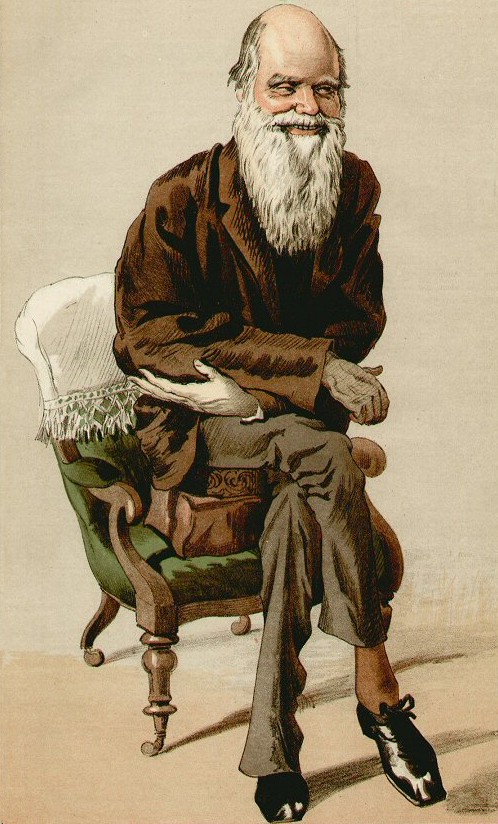
El 12 de febrero es el día de nacimiento de Charles Darwin.

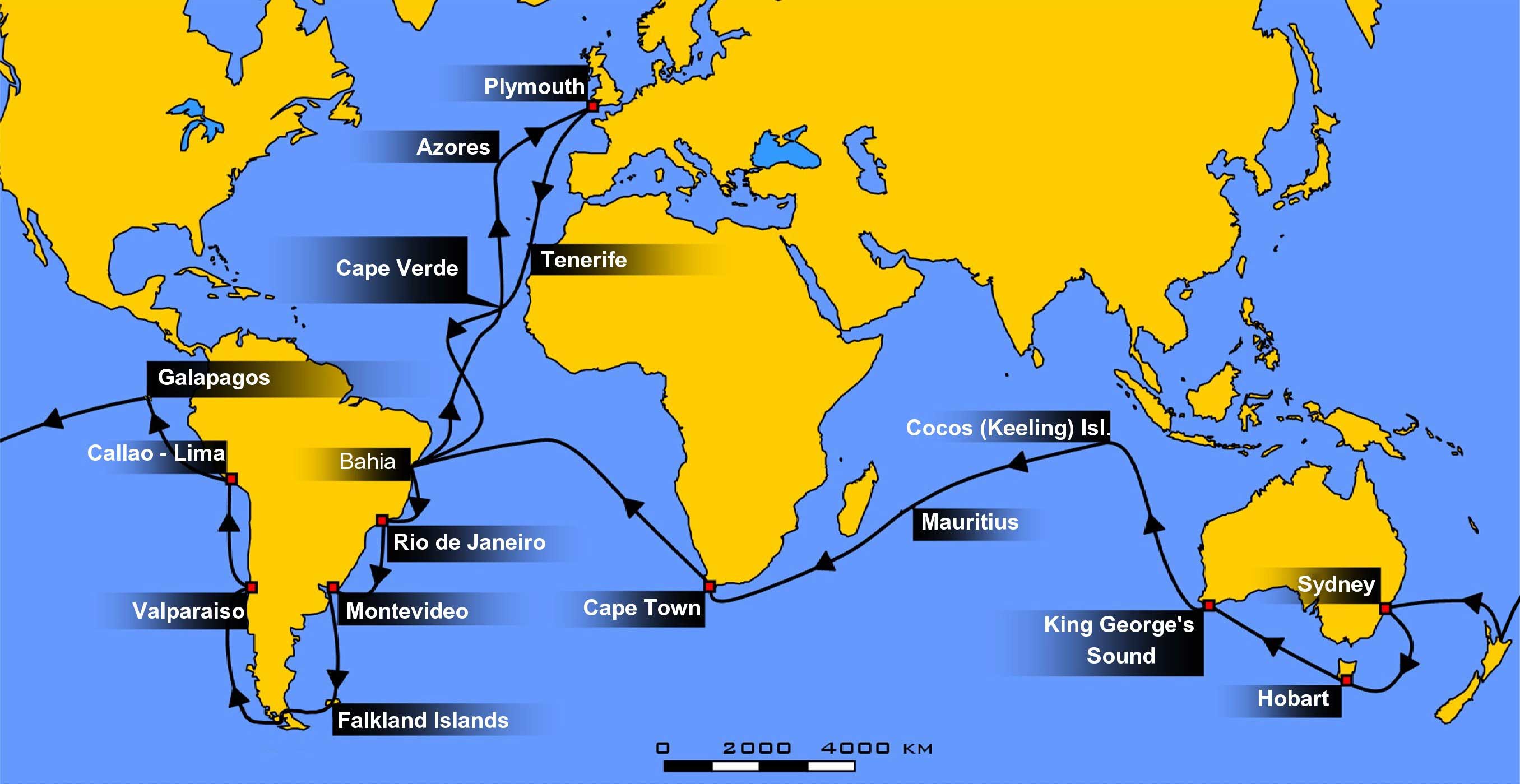
¡Son 200 años ya! Y quería compartir algo con ustedes al respecto. El capítulo XVI del relato de la aventura de Darwin en el H.M.S. Beagle. ¿Por qué? Es que se refiere a cuando Charles vino a estas tierras en las costas del del Pacífico el 19 de julio de 1835. Peor época no pudo haber escogido, julio es habitualmente el mes más friamente gris del año en esta ciudad de Lima. Así que Charles no encontró lo que las crónicas estivales de otros visitantes referían. Al oeste de la ciudad actual el clima es diferente, claro, pero no me extraña que a Darwin no le gustara la vista de entonces. Por otro lado, el fin de las guerras de independencia y la anarquía del momento tenían al país de cabeza, de modo que tan sombrío panorama le dejó perplejo.
 On the hills near Lima, at a height but little greater, the ground is carpeted with moss, and beds of beautiful yellow lilies, called Amancaes. This indicates a very much greater degree of humidity, than at a corresponding height at Iquique. Proceeding northward of Lima, the climate becomes damper, till on the banks of the Guayaquil, nearly under the equator, we find the most luxuriant forests. The change, however, from the sterile coast of Peru to that fertile land is described as taking place rather abruptly in the latitude of Cape Blanco, two degrees south of Guayaquil.
Sin embargo en aquel entonces

sobrevivía en las colinas de Lima la bonita flor de amancaes, que le daba el tono amarillo a su entorno y que en algún tiempo casi se hizo un emblema de esta ciudad. Ahora poca gente limeña puede decir que la conoce. Eso fue algo que le gustó a Charles ¡qué diría del panorama actual! :(
También hay una referencia a Cabo Blanco, un resort donde se pezca al merlín y donde se practica el surf. Lo señala como el sitio donde se da el cambio climático entre el desértico sur costeño y el boscoso del norte. Sin embargo, en lo personal el cambio climático lo sentí bastante más al sur.
 The city of Lima is now in a wretched state of decay: the streets are nearly unpaved; and heaps of filth are piled up in all directions, where the black gallinazos, tame as poultry, pick up bits of carrion. The houses have generally an upper story, built on account of the earthquakes, of plastered woodwork but some of the old ones, which are now used by several families, are immensely large, and would rival in suites of apartments the most magnificent in any place. Lima, the City of the Kings, must formerly have been a splendid town. The extraordinary number of churches gives it, even at the present day, a peculiar and striking character, especially when viewed from a short distance.
Como ya decía en aquellos tiempos Darwin, en alguna época Lima, la Ciudad de los Reyes, fue un lugar espléndido. Probablemente las mismas construcciones con tallados de madera que él vio son las que hasta ahora se levantan en el Centro Histórico de la ciudad. Sin embargo, ya entonces estaba bastante maltratada. Y los gallinazos (primos menores del cóndor), figura casi representativa de Lima Antigua, no escaparon a su ojo avizor.
One day I went out with some merchants  to hunt in the immediate vicinity of the city. Our sport was very poor; but I had an opportunity of seeing the ruins of one of the ancient Indian villages, with its mound like a natural hill in the centre. The remains of houses, enclosures, irrigating streams, and burial mounds, scattered over this plain, cannot fail to give one a high idea of the condition and number of the ancient population. When their earthenware, woollen clothes, utensils of elegant forms cut out of the hardest rocks, tools of copper, ornaments of precious stones, palaces, and hydraulic works, are considered, it is impossible not to respect the considerable advance made by them in the arts of civilization. The burial mounds, called Huacas, are really stupendous; although in some places they appear to be natural hills incased and modelled.
 Tampoco pasarían desapercibidas para él las huacas, complejos prehispánicos, que con el crecimiento de la ciudad fueron desapareciendo una a una lamentablemente. Ahora hay varias, pero sin embargo, la cantidad de huacas destruidas en la ciudad entre el Virreynato y los tiempos de la República es espeluznante.
I was much interested by finding on the terrace, at the height of eighty-five feet, embedded amidst the shells and much sea-drifted rubbish, some bits of cotton thread, plaited rush, and the head of a stalk of Indian corn: I compared these relics with similar ones taken out of the Huacas, or old Peruvian tombs, and found them identical in appearance.  On the mainland in front of San Lorenzo, near Bellavista, there is an extensive and level plain about a hundred feet high, of which the lower part is formed of alternating layers of sand and impure clay, together with some gravel, and the surface, to the depth of from three to six feet, of a reddish loam, containing a few scattered sea-shells and numerous small fragments of coarse red earthenware, more abundant at certain spots than at others. At first I was inclined to believe that this superficial bed, from its wide extent and smoothness, must have been deposited beneath the sea; but I afterwards found in one spot, that it lay on an artificial floor of round stones. It seems, therefore, most probable that at a period when the land stood at a lower level there was a plain very similar to that now surrounding Callao, which being protected by a shingle beach, is raised but very little above the level of the sea. On this plain, with its underlying red-clay beds, I imagine that the Indians manufactured their earthen vessels; and that, during some violent earthquake, the sea broke over the beach, and converted the plain into a temporary lake, as happened round Callao in 1713 and 1746. The water would then have deposited mud, containing fragments of pottery from the kilns, more abundant at some spots than at others, and shells from the sea. This bed, with fossil earthenware, stands at about the same height with the shells on the lower terrace of San Lorenzo, in which the cotton-thread and other relics were embedded.
 Hence we may safely conclude, that within the Indo-human period there has been an elevation, as before alluded to, of more than eighty-five feet; for some little elevation must have been lost by the coast having subsided since the old maps were engraved. At Valparaiso, although in the 220 years before our visit, the elevation cannot have exceeded nineteen feet, yet subsequently to 1817, there has been a rise, partly insensible and partly by a start during the shock of 1822, of ten or eleven feet. The antiquity of the Indo-human race here, judging by the eighty-five feet rise of the land since the relics were embedded, is the more remarkable, as on the coast of Patagonia, when the land stood about the same number of feet lower, the Macrauchenia was a living beast; but as the Patagonian coast is some way distant from the Cordillera, the rising there may have been slower than here. At Bahia Blanca, the elevation has been only a few feet since the numerous gigantic quadrupeds were there entombed; and, according to the generally received opinion, when these extinct animals were living, man did not exist. But the rising of that part of the coast of Patagonia, is perhaps no way connected with the Cordillera, but rather with a line of old volcanic rocks in Banda Oriental, so that it may have been infinitely slower than on the shores of Peru. All these speculations, however, must be vague; for who will pretend to say that there may not have been several periods of subsidence, intercalated between the movements of elevation; for we know that along the whole coast of Patagonia, there have certainly been many and long pauses in the upward action of the elevatory forces.
Cuando se refiere a la isla San Lorenzo frente a Lima me llamó la atención no sólo cuando habla de los restos prehispánicos halllados en ella (las islas entonces eran sitios respetados) sino cuando hace referencia al terremoto de 1746 (que dejó en escombros a la ciudad de Lima) en que refiere la inundación del puerto del Callao, vecino a Lima. Actualmente no me imagino a dicho puerto convertido en lago. Muy fuerte la idea. Por cierto, interesante su especulación sobre la elevación de los Andes y el hombre indígena. En el siglo XXI aún hay gente que no es conciente de que los Andes se han elevado.
Un 7 de septiembre de 1835 el H.M.S. Beagle zarparía del puerto de El Callao, Perú, rumbo a Las Galápagos. y ahí comenzaría la historia que todo el mundo comentaría.
========
Nota aparte, antes que alguien lo diga, el "eslabón perdido" no existe, hay montones de formas transicionales.